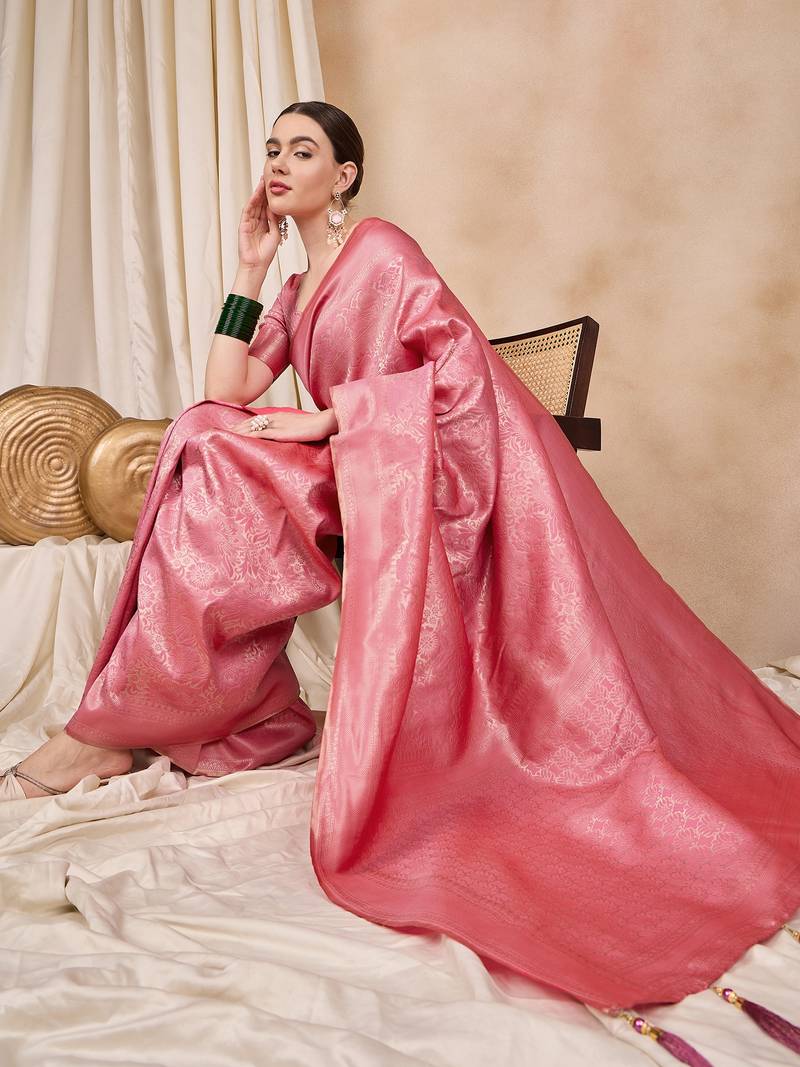
India has a rich textile history, and perhaps the best example of this is the lustrous silk sarees. Be it the regal Kanjeevarm of the South or the intricately woven Banarasi sarees of the North, silk sarees have always been a symbol of grace and timeless beauty. Every region in India has taken this elegant fabric and given it its own regional twist. The result is the mind-boggling variety of silk sarees that will make the heart of any ethnic fashion lover skip a beat. These drapes are used extensively in weddings, festivals, cultural events, and even parties. Today, we will explore India’s textile heritage and examine the wide varieties of Silk sarees that are loved
Kanjeevaram Silk Sarees (Tamil Nadu)
This beautiful silk saree is the queen of silk sarees and is from Kanchipuram in Tamil Nadu. Its rich look, luxurious texture, and durability make this silk saree a favorite. These sarees are woven from the finest mulberry silk and decorated with gold or silver zari work. The striking contrast borders and intricate motifs inspired by temple architecture, mythology, flowers, and nature make the Kanchipuram silk sarees stand apart. The body, border, and pallu are woven separately and then locked together using a special technique that provides strength and longevity.
Banarasi Saree (Uttar Pradesh)
The silk sarees from Varanasi are among the most popular and luxurious sarees in India. They are known for their rich brocade work and elaborate designs using silk and metallic zari threads. Floral vines, paisleys, Mughal-inspired patterns, and intricate jaal work are common motifs in Banarasi silk sarees. The craftsmanship of these sarees is phenomenal; it takes some pieces weeks and months to finish. They are the first choice for bridal and festive wear being royal in appeal.
Mysore Silk Saree (Karnataka)
These rich sarees are famous for their understated elegance and smoothness. These Mysore sarees are made from premium silk and are known for their lightweight feel and natural lustre. Unlike the heavily-ornamented silk sarees, the Mysore silk sarees often have minimalist designs with clean lines and elegant zari borders. Because of its simplicity, it is a favorite for occasions such as formal gatherings, office events, religious ceremonies, and festive occasions.
Patola Saree (Gujarat)
A masterpiece of textile artistry, the Patola silk sarees hail from the vibrant state of Gujarat. They are famous for their double Ikat weaving technique, where both the warp and the weft threads are resist-dyed before weaving. This is a highly labour-intensive process that requires technique and precision. They are characterized by geometric patterns, floral motifs, birds, and traditional symbols. Their vibrant colors and intricate patterns make them stand out easily.
Paithani Saree (Maharashtra)
The pride of Maharashtra, this silk saree is cherished as the state’s most treasured textile. They originate from Paithan and are known for their vibrant color combinations and intricate hand-worked pallus. The pallus feature motifs like peacocks, lotuses, and floral designs. The pallu serves as the centerpiece of the saree, showcasing elaborate artistry and skill. Typically worn during weddings and festivals, these silk sarees are truly special.
Baluchari Saree (West Bengal)
These gorgeous sarees are easily recognizable by the storytelling motifs that are woven directly into the fabric. They originate from West Bengal and depict scenes from epics like the Mahabharata and the Ramayana. This narrative detailing sets them apart from other silk sarees. The pallu and borders both depict motifs that reflect mythology, culture, and tradition. Women who appreciate traditional craftsmanship and cultural depth love Baluchari sarees.
 Fashion for Life
Leave a comment