
Dhoti is an Indian traditional garment worn by men and has been used for centuries. Dhoti holds importance culturally and traditionally, as many Indians wear dhoti for all kinds of occasions. From visiting temples, going to the pooja, performing special rituals or ceremonies, and getting together for spiritual or other gatherings, dhoti is a garment of choice among men looking for a way to express their devotion to God and respect for their heritage through the garment they wear. Across the country, men still wear dhoti to display respect to the culture of India and are an integral part of the religious dress code.
Why Dhotis Are Preferred for Religious Ceremonies
In many religious ceremonies, there is a strong emphasis on purity, modesty and traditional values. The Dhoti is a perfect example of these principles and, therefore, is one of the most accepted forms of Indian men’s clothing to wear during sacred occasions. Traditional attire is encouraged or required by many temples and other religious institutions for important ceremonies and rituals. A neat and well-defined draping of the dhoti with either a plain kurta or angavastram creates a respectful appearance to honor the spiritual aspect/importance of the religious occasion whilst allowing for comfort throughout the entire duration of the ceremony.
Popular Dhoti Styles for Sacred Occasions
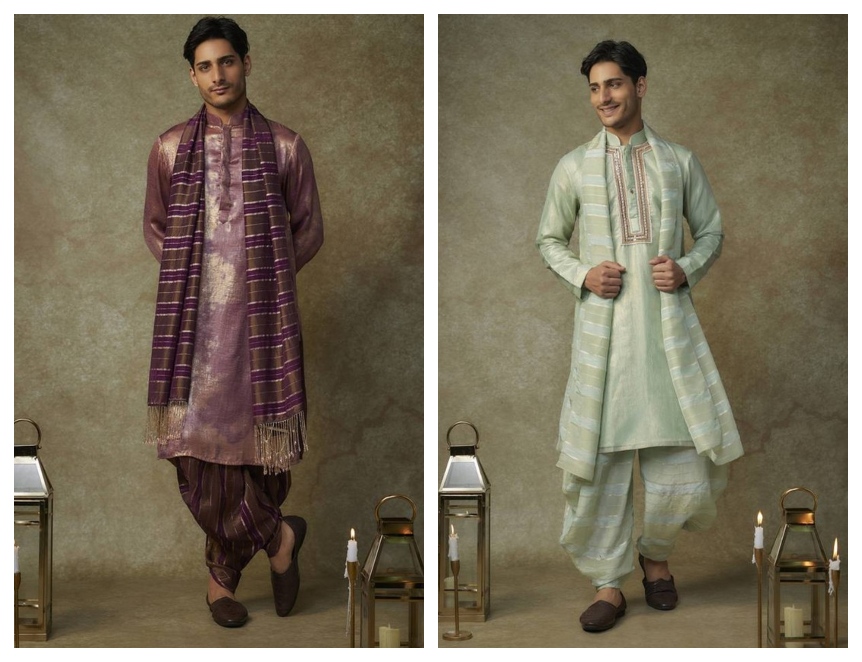
Many regions across India have their own individual styles of dhoti which are traditionally worn during various formals associated with religious ceremonies. Traditional white or off-white dhoti with a gold borders is particularly common in southern India for temple celebrations, ceremonies and festivals. In regions outside South India, men will normally wear a cotton dhoti with a traditional kurta when performing pooja ceremonies or conducting family rituals etc. Collectively, these traditional styles of dhoti represent the diversity of traditional clothing worn by Indian males while preserving the cultural customs of multiple generations.
Choosing the Right Fabric for Comfort and Elegance
Fabric selection is very important in selecting a dhoti for spiritual ceremonies. When looking for a dhoti fabric, you probably will find that cotton is the most common choice. It’s lightweight, breezy, and friendly for wearing for an extended period of time. Silk dhotis are also very desirable for special ceremonies such as rituals, marriages, and major festivals. The rich look of the dhoti adds classiness to the look, but still does not deviate from the traditional look of men’s clothing in India. The higher quality the dhoti, the more comfortable you will find wearing them, and the more polished the appearance will be during the event.
Pairing Your Dhoti with Traditional Accessories
Traditional dhoti-inspired outfits may benefit from coordinating accessories that add to the outfit’s traditional feel. Men will often complete the look by adding a kurta or angavastram to their dhoti. They can add traditional sandals to their dhoti to create an even more complete outfit and keep with the traditional way of dressing. To dress respectfully for religious ceremonies, it is imperative to maintain a balance between the elements used in the outfit. These choices made in how a man styles themselves help to elevate the value of Indian traditional wear for men while staying true to the traditions of the garments.
The Timeless Appeal of White and Cream Dhotis
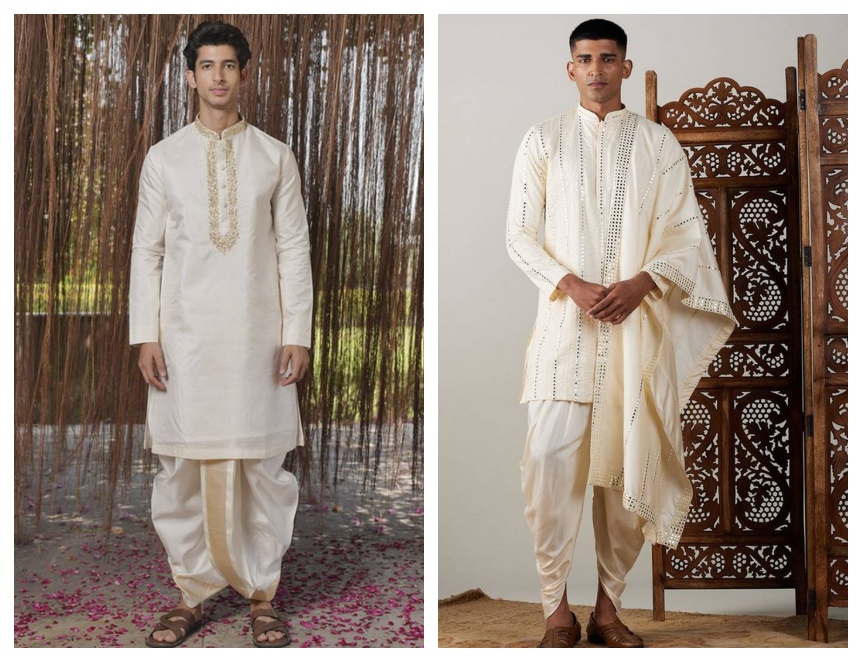
White or cream Dhoti remains the most popular option for traditional religious ceremony because it is associated with purity and simplicity. They are classic colors used in many religious ceremonies, and they introduce a certain amount of versatility when paired with traditional clothing in similar shades. Regardless of whether you are attending a temple ceremony, housewarming pooja or a festival of religion like Holi, these timeless dhoti styles will always be included in menswear and will continue to be the choice of men of every age.
Preserving Tradition Through Dhoti Fashion
Although the style of wearing a dhoti has changed over the past several decades and will continue to change with new fashions, it still symbolizes a deep-rooted element of Indian culture and spirituality. Many people today are trying to reconnect with their heritage through the use of the dhoti’s traditional outfit during various cultural celebrations and religious ceremonies. Because the combination of comfort, style, and cultural meaning will never go out of style as a traditional Indian garment worn by men, men have the ability to practice their culture during sacred occasions with pride and respect by choosing to wear a dhoti.


Leave a Reply