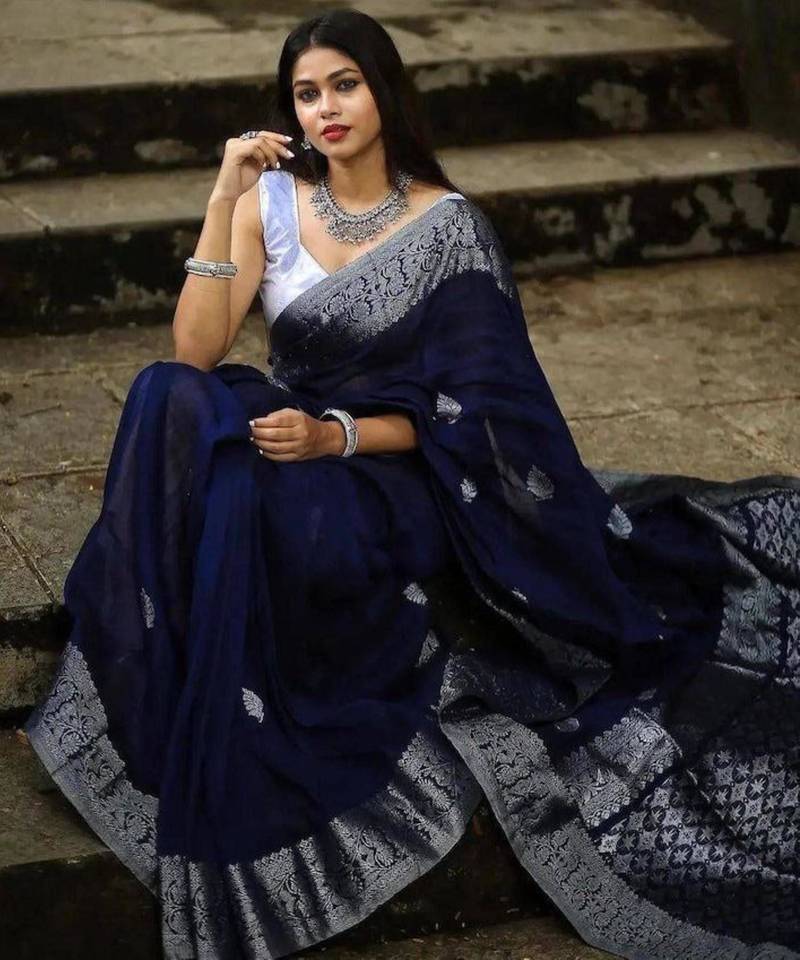
All of us are currently living in the 21st century, yet we always find our way back to the outfits that were crafted in the 1600s. Yes, we are talking about the timeless sarees. Woven with culture, tradition, and impeccable craftsmanship, sarees are women’s most loved outfit. They are six-yard wonders packed with elegance and passed down through generations.
Today, we see a wide range of sarees, from classic banarasi and kanjeevaram sarees to modern pre stitched sarees, sequin sarees, wedding sarees, and one minute sarees. We have loved most of these designer sarees for their beauty, charm, ease, and comfort. But have you ever wondered how these sarees made its journey from being culturally significant to modern fashion essentials?
In this blog, we will take you on a beautiful journey through the history of our timeless sarees. Let’s explore the evolution of sarees from tradition to trends.
The Time of Traditions
Today’s saree took its name long back, around thousands of years ago. The word saree has been derived from two Sanskrit words, sati and sattika. While sati means a strip of cloth, sattika refers to a woman’s attire. Together, they beautifully capture the essence of a timeless saree.
Sarees were invented around 4000 years ago, and its snippets are still alive in ancient Indian history. In the beginning, saree were draped as a single piece of clothing, without a petticoat or a blouse. However, this garment was paired with various other clothing elements, depending on the region and class. For example, wearing a shawl over the head, a breast band, or a belt in the northern regions and wearing a skirt and a dupatta in the southern parts of India.
The Magnificent Mughal Era
These garments that originated in the Indus Valley Civilization took a dramatic turn during the Mughal era. Our simple sarees got a magnificent upgrade in the Mughal court. Rich fabrics like silk and velvet were introduced to the saree fashion. Intricate embroideries like zari work, zardozi, and gotta patti were used as embellishments and carved over these sarees during the Mughal timeline. This era witnessed the integration of Indian and Persian traditions coming together into an elegant saree outfit.
Sarees During the British Rule
Indian sarees had to witness the test of time during the British Raj in India. While the British tried to impose Western culture and clothing in India, our brave women held their cultural roots very tightly. During this colonial period, sarees became a symbol of our cultural identity, giving them an extraordinary significance. This time gave birth to fusion fashion styles like long-sleeved blouses, collar blouses, petticoats, and jackets over a saree. Fabrics like cotton and soft silk were introduced. Ever since then, these elements have fused with Indian fashion and have become a style icon in the contemporary era.
Post Independence
After 1947, the Indian sarees became a symbol of grace and gratitude. They became a national pride and were adorned by national leaders like Indira Gandhi and Sarojini Naidu. Indian fabrics like Chanderi, and Khadi were introduced to suit its climate. Sarees were the most popular and most chosen outfit worn by hundreds and thousands of women every day.
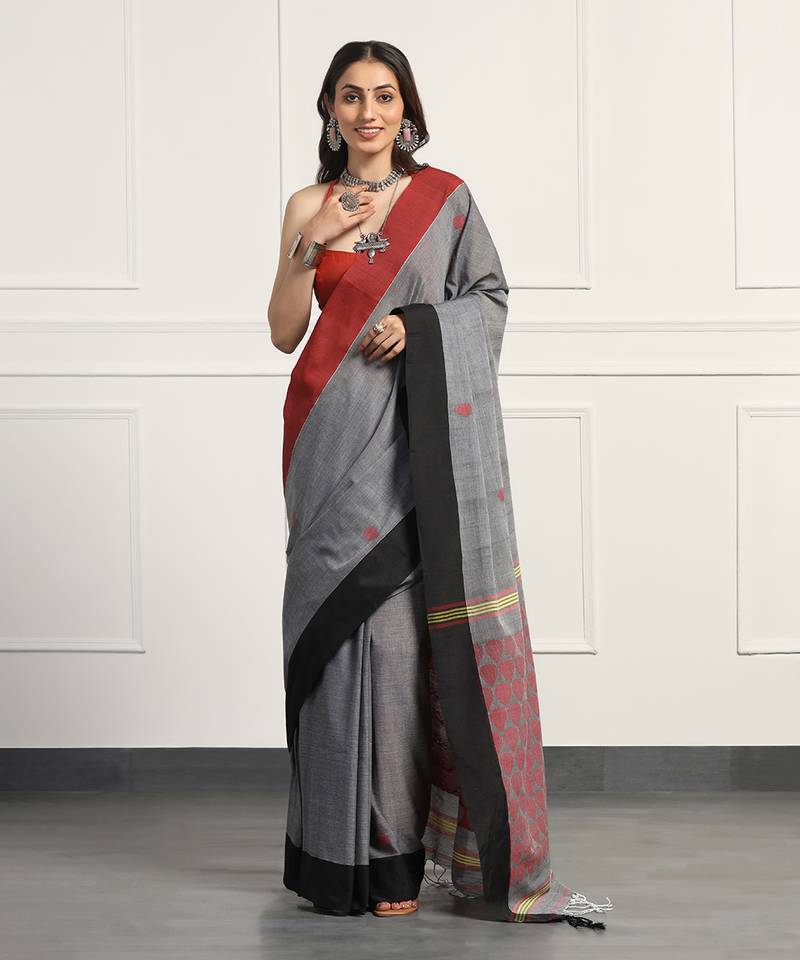
As decades passed by, the saree style grew in its horizons and reached more people. During the 1980s, the Indian cinema industry introduced several saree modifications. Bollywood actresses like Madhuri Dixit, Sridevi, and Hema Malini wore various kinds of sarees in movies and songs. Fabrics like chiffon, georgette, and linen were introduced during this time and used by women for their lightweight and comfortable qualities. New embroideries and embellishments like lacework, shimmer, and sequins were incorporated into saree styles.
In the 1990s and 2000s, a woman embraced her identity as a professional at the workplace, and the styles of a saree changed along with this new identity. More formal sarees with cotton and linen fabrics were introduced. Elegant styles and minimal embroideries took a front seat in a working woman’s wardrobe. Different styles of sarees started to cross the regional boundaries and were adapted by women all across the globe for their endless beauty.
Today’s Trends
Today, sarees are not limited to the culture or tradition alone. They have become a versatile choice for many women for weddings, festivals, formal, and casual occasions.
In today’s contemporary time, tradition and innovation go hand in hand. Traditional sarees have been upgraded to fit this fast-paced era, giving birth to a variety of styles. Dhoti-style sarees, belted sarees, pre-stitched sarees, and ready-to-wear sarees are among the most popular kinds today. These sarees are a smart as well as a stylish option for today’s young generation. You can get these in a wide variety of fabrics like cotton, linen, georgette, crepe, chiffon, velvet, satin, and net. With so many fabric options, you also have a lot of embroidery options. Different textures, patterns, prints, embroideries, and embellishment has changed the saree game today, making them more adorable and attention-worthy.
Sarees have travelled a long way, haven’t they? From the time of tradition to today’s modern trends, they have evolved and unfolded beautifully. From ancient roots to trendy rhythms, these six yards of elegance continue to mesmerize us in every possible way!


Leave a Reply